Bin Store vs Thrift Store: What’s the Real Difference?
Bin Store vs Thrift Store: What’s the Real Difference?
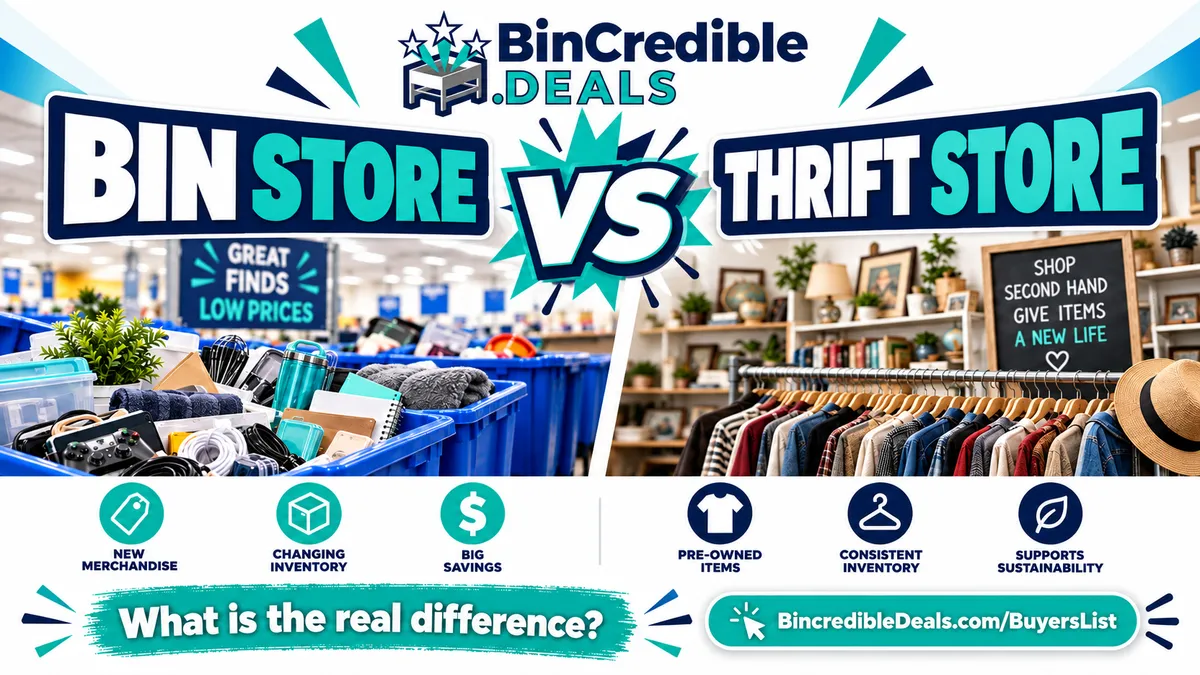
Bin stores and thrift stores can both be great places to save money, but the shopping experience is not the same. If you walk into a bin store expecting neatly tagged shelves like a traditional thrift shop, you may be surprised. Bin shopping moves faster, prices can follow a daily schedule, and the fun comes from digging through changing inventory to see what you can find.
Understanding the difference helps you choose the shopping style that fits your budget, patience, and goals.
What Is a Bin Store?
A bin store is a discount store where merchandise is placed in large bins for customers to search through. Inventory can include electronics, toys, home goods, tools, small appliances, clothes, cleaning supplies, cosmetics, gifts, and other everyday products.
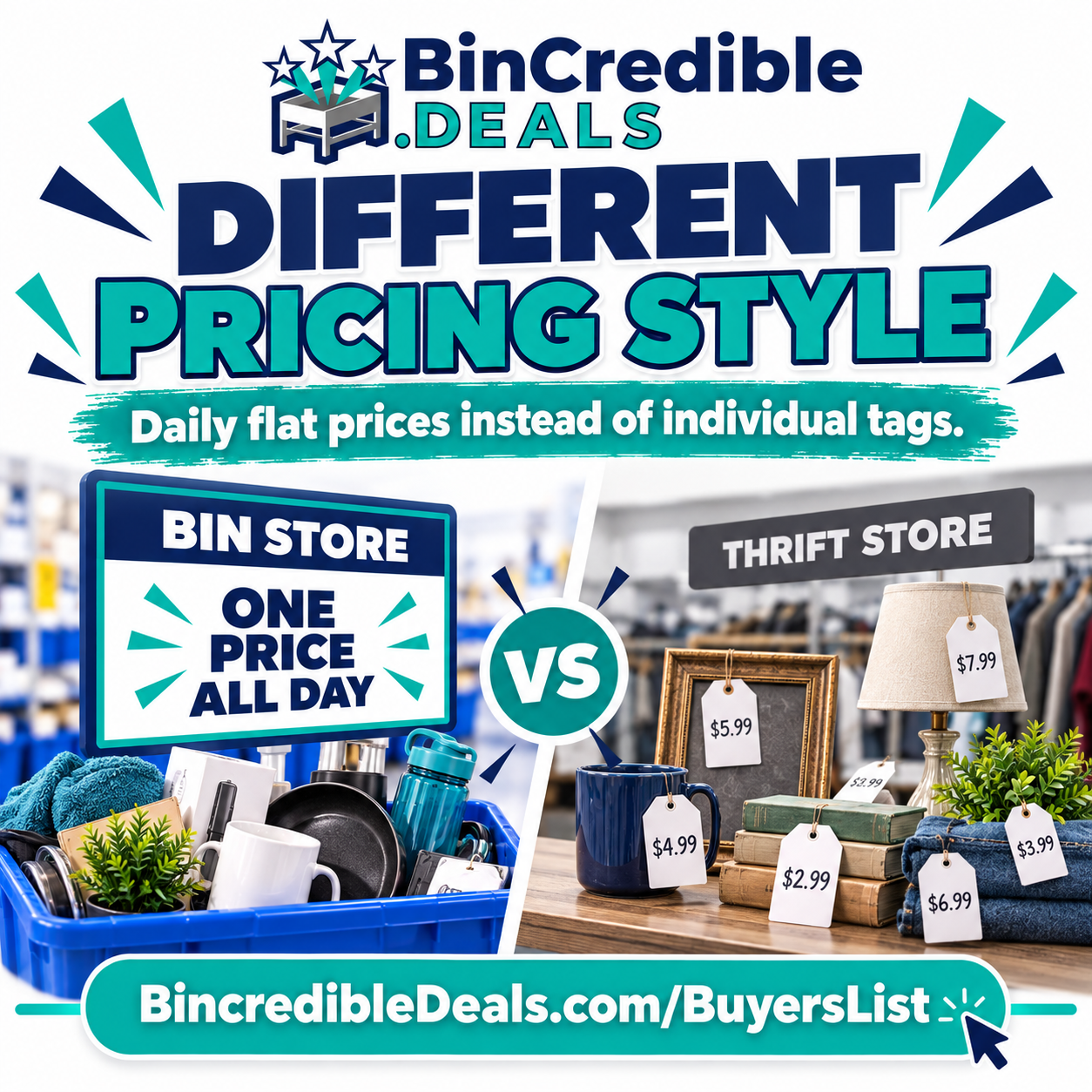
Many bin stores use a daily pricing system. Instead of giving every individual item its own price tag, items in the bins may follow the same price for that shopping day. As pricing changes, shoppers can visit earlier for more selection or wait for a lower-price day.
That changing mix is a big part of what makes bin shopping feel like a treasure hunt.
What Is a Thrift Store?
A thrift store usually sells previously owned or donated items. Clothing, furniture, books, household goods, décor, and accessories are common categories, although the exact selection depends on the store.
Most thrift stores organize merchandise by section and price items individually. One shirt may have one price, while a lamp or kitchen item has another. Shoppers can often browse by category without digging through large mixed bins.
The Shopping Experience Feels Different
One of the biggest differences is how you actually shop.
At a thrift store, you may walk directly to clothing racks, books, furniture, or household sections. Items are usually separated into categories, making it easier to focus on one type of product.
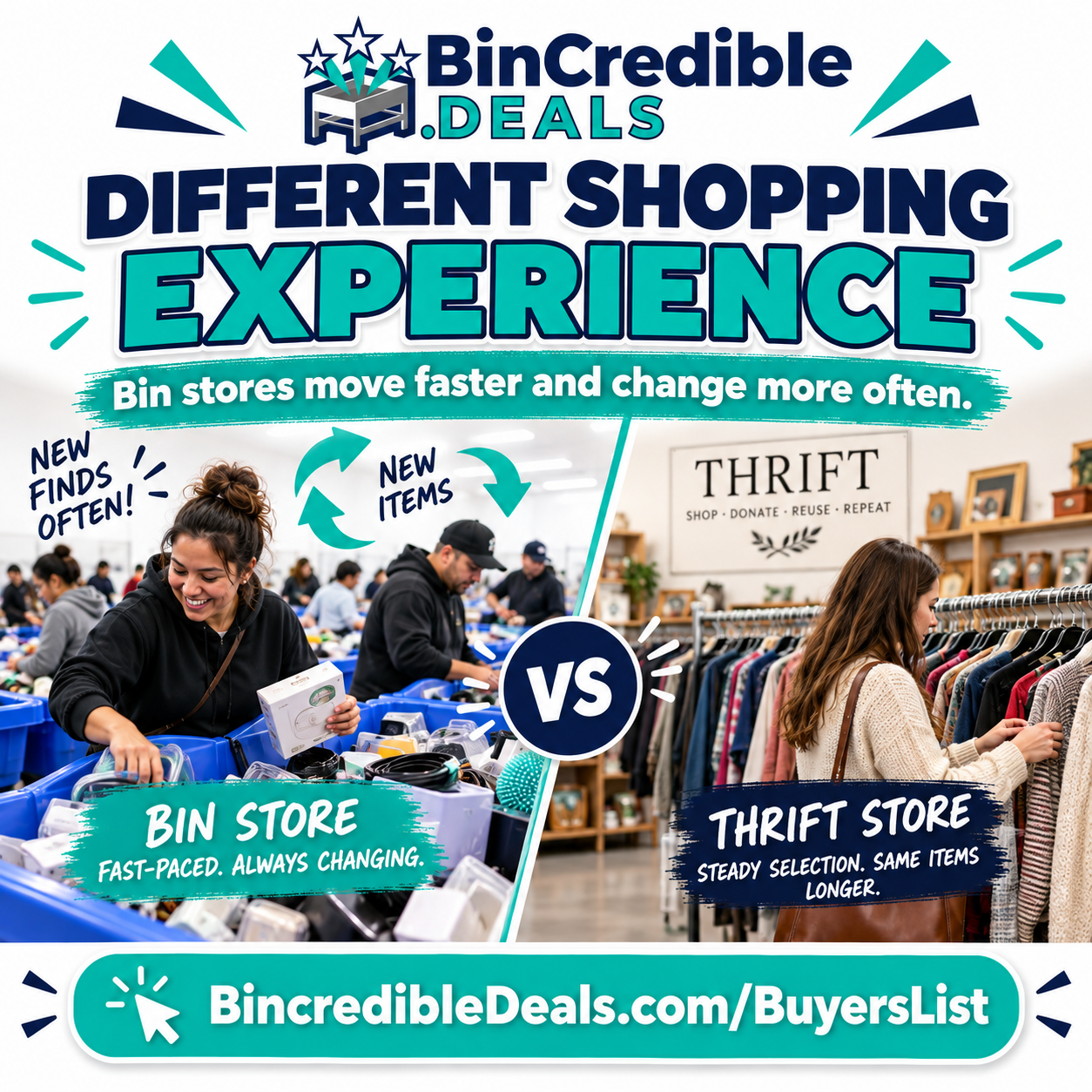
At a bin store, the search is more hands-on. You may need to move items carefully, look under other products, inspect packaging, and spend time checking the bins. The item you want might not be sitting where you expect it.
That is why patience matters. Bin shopping rewards people who enjoy looking closely instead of only scanning the top layer.
The Pricing Style Changes Your Strategy
Thrift stores commonly price merchandise item by item. Two similar products may have different tags based on condition, brand, category, or the store's pricing process.
Bin stores often use a daily flat-price structure for items in the bins. That changes the strategy.
Shopping earlier may give you a better chance at popular items before other shoppers pick them up. Waiting for a lower-price day may stretch your budget further, but the available selection can be different.
Neither approach is automatically better. It depends on whether you care more about selection, price, or the fun of seeing what is still there.
Where Does the Merchandise Come From?
Inventory sources can also be different.
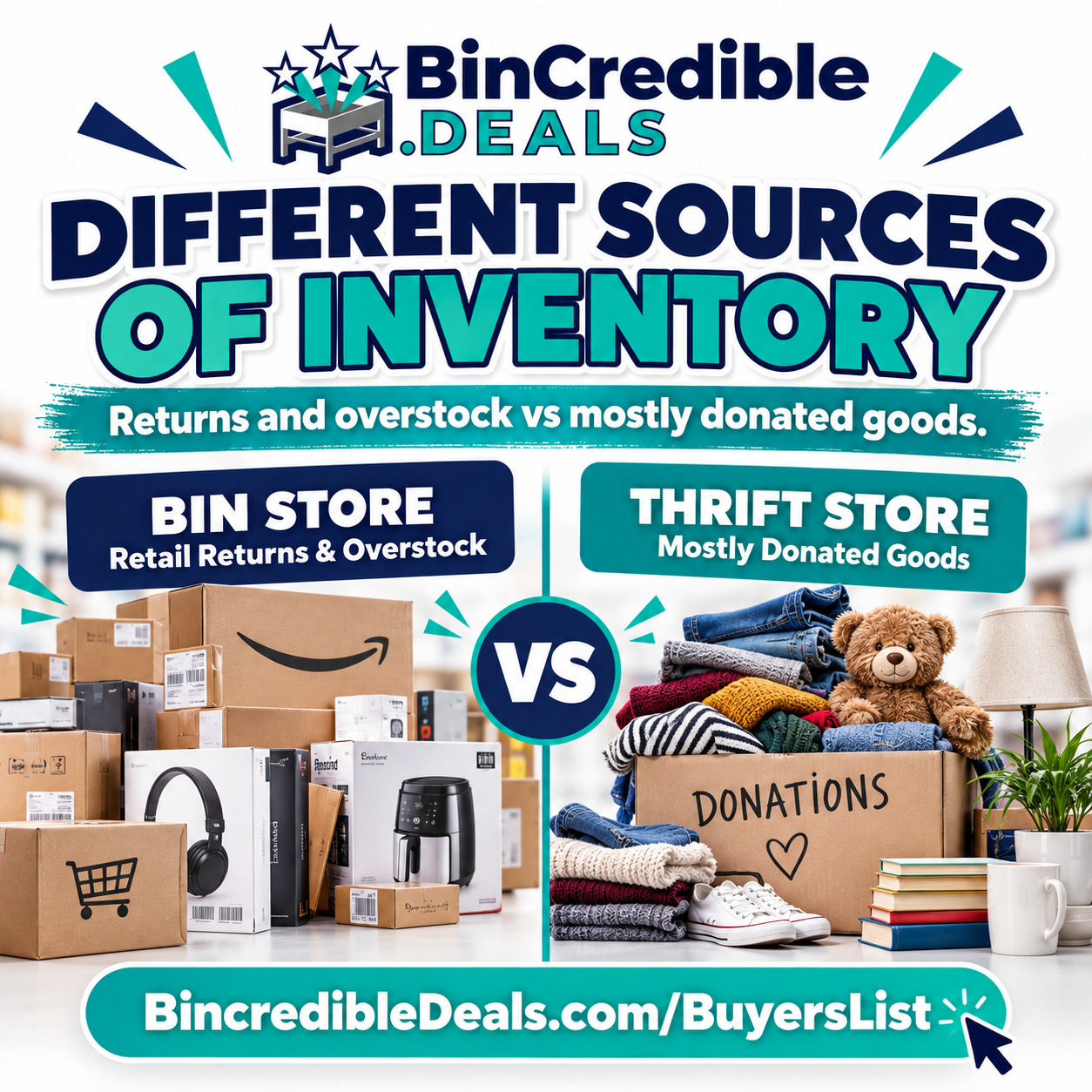
Thrift stores are commonly associated with donated or previously owned goods. Bin stores often carry liquidation-style inventory such as retailer returns, shelf pulls, excess merchandise, open-box goods, or overstock.
Because bin-store merchandise can arrive in mixed loads, one visit may look very different from the next. You might find a household item, toy, gadget, tool, or small appliance during the same trip.
That variety is part of the appeal.
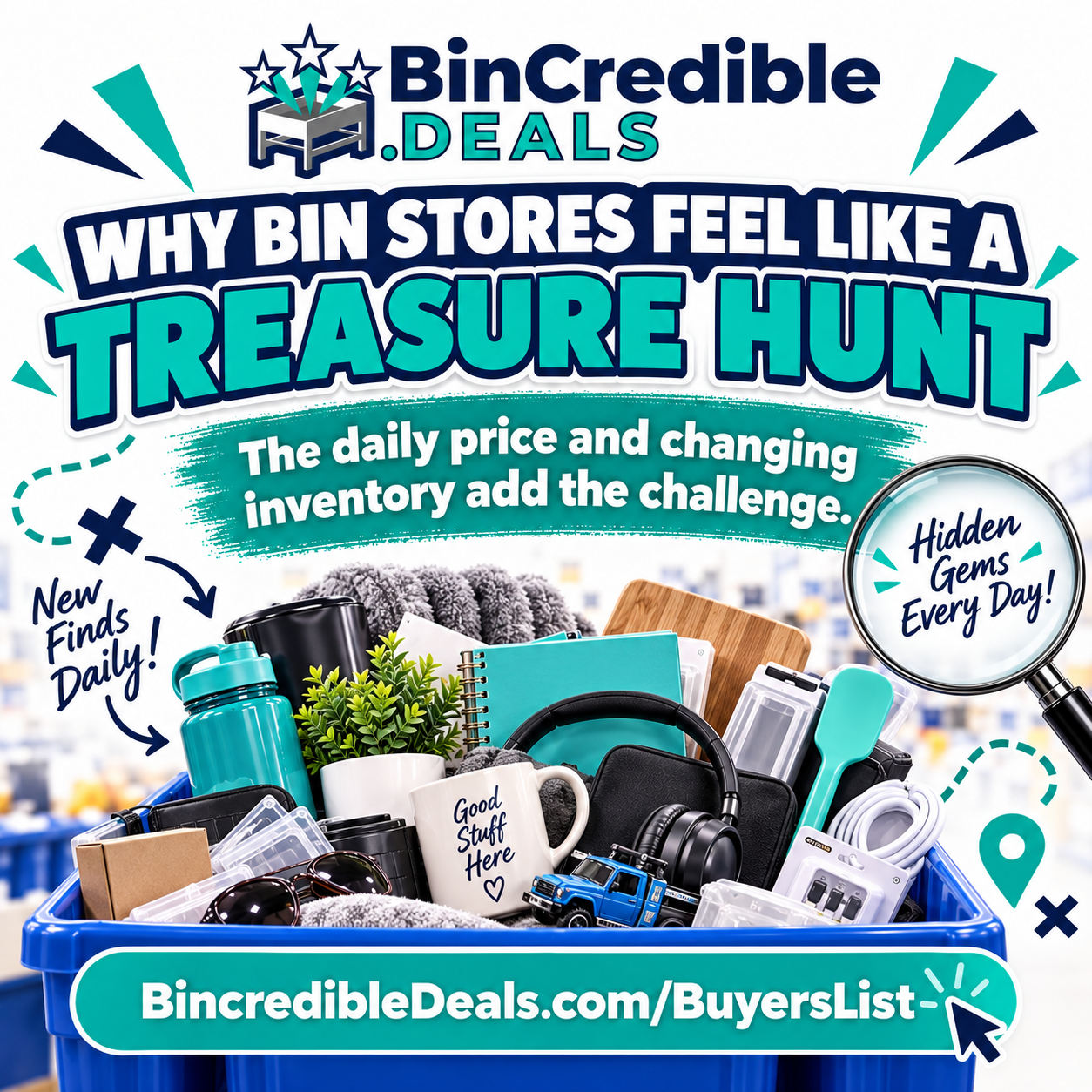
Why Bin Stores Feel Like a Treasure Hunt
A bin store does not always give you a predictable shopping list. You may come in hoping to find one thing and discover something completely different that is more useful.
Changing inventory, daily pricing, and fast-moving selection create the treasure-hunt feeling. Good finds can be easy to miss, so it pays to take your time and check items carefully.
Inspect the condition, look for missing parts, confirm the model or size when needed, and ask yourself whether you will actually use the item. A low price is only a good deal when the product makes sense for you.
Which Shopping Style Fits You?
A thrift store may fit you better when you prefer organized sections, secondhand goods, and a more traditional browsing experience.
A bin store may be more your style if you enjoy digging, comparing, checking products, and shopping a selection that changes often. It can also be fun for shoppers who like setting a budget and seeing how much useful value they can uncover.
Some bargain shoppers enjoy both. The important part is knowing what kind of experience you are walking into before you shop.
Tips for Your Next Bin Store Visit
Go in with a budget, but stay flexible about what you may find. Check the item instead of buying only because the price looks low. Look for missing cords, pieces, lids, remotes, chargers, or adapters. Inspect packaging and visible condition. For electronics or accessories, check model numbers and compatibility when possible.
It also helps to avoid rushing. Hidden deals are easy to overlook when you only scan the surface of a bin.
At BinCredible Deals, the fun is in the hunt. Every visit can feel different, and that is part of what keeps bargain shopping interesting.
The Bottom Line
Bin stores and thrift stores both help shoppers find affordable products, but they do it differently. Thrift stores usually focus on individually priced, often donated goods arranged by category. Bin stores offer a faster-changing, liquidation-style experience where daily pricing and mixed inventory can shape how you shop.
Once you understand the difference, you can choose the experience that matches your budget and shopping style.
Want to know when new deals and updates are available? Join the BinCredible Deals Buyer List and stay connected.
FAQs
What is the main difference between a bin store and a thrift store?
A bin store usually sells changing liquidation-style inventory from large bins, while thrift stores commonly sell donated or previously owned items organized by category.Are bin store items used like thrift store items?
Not necessarily. Bin stores may carry customer returns, overstock, shelf pulls, open-box items, and other liquidation merchandise. Condition can vary, so shoppers should always inspect items carefully.How does pricing work at a bin store?
Many bin stores use a daily flat-price system for merchandise in the bins instead of pricing every item individually.Why do bin store prices change by day?
Changing prices give shoppers different strategies. Earlier shopping may offer more selection, while lower-price days may offer better savings on remaining merchandise.Why do bin stores feel like a treasure hunt?
Inventory changes frequently, products are mixed together, and unexpected finds can be hidden throughout the bins.Are thrift stores more organized than bin stores?
Thrift stores often organize merchandise into sections such as clothing, furniture, books, and household goods. Bin stores are usually more focused on digging and searching through mixed merchandise.What kinds of products can you find at a bin store?
Shoppers may find electronics, toys, tools, home goods, small appliances, clothing, cleaning products, cosmetics, gifts, and many other everyday items.Should I inspect items before buying from a bin store?
Yes. Check the condition, packaging, missing pieces, cords, chargers, model numbers, sizing, and compatibility before deciding whether an item is worth buying.Is it better to shop a bin store early or wait for a lower-price day?
It depends on your goal. Shopping earlier may give you more choices, while waiting may mean a lower price but a different or smaller selection.Who would enjoy shopping at a bin store?
Bin stores are a good fit for bargain hunters who enjoy digging, comparing products, working within a budget, and discovering unexpected deals.
